
Sheet Metal Prototyping vs. 3D Printing: Best Approaches for Early Design Testing
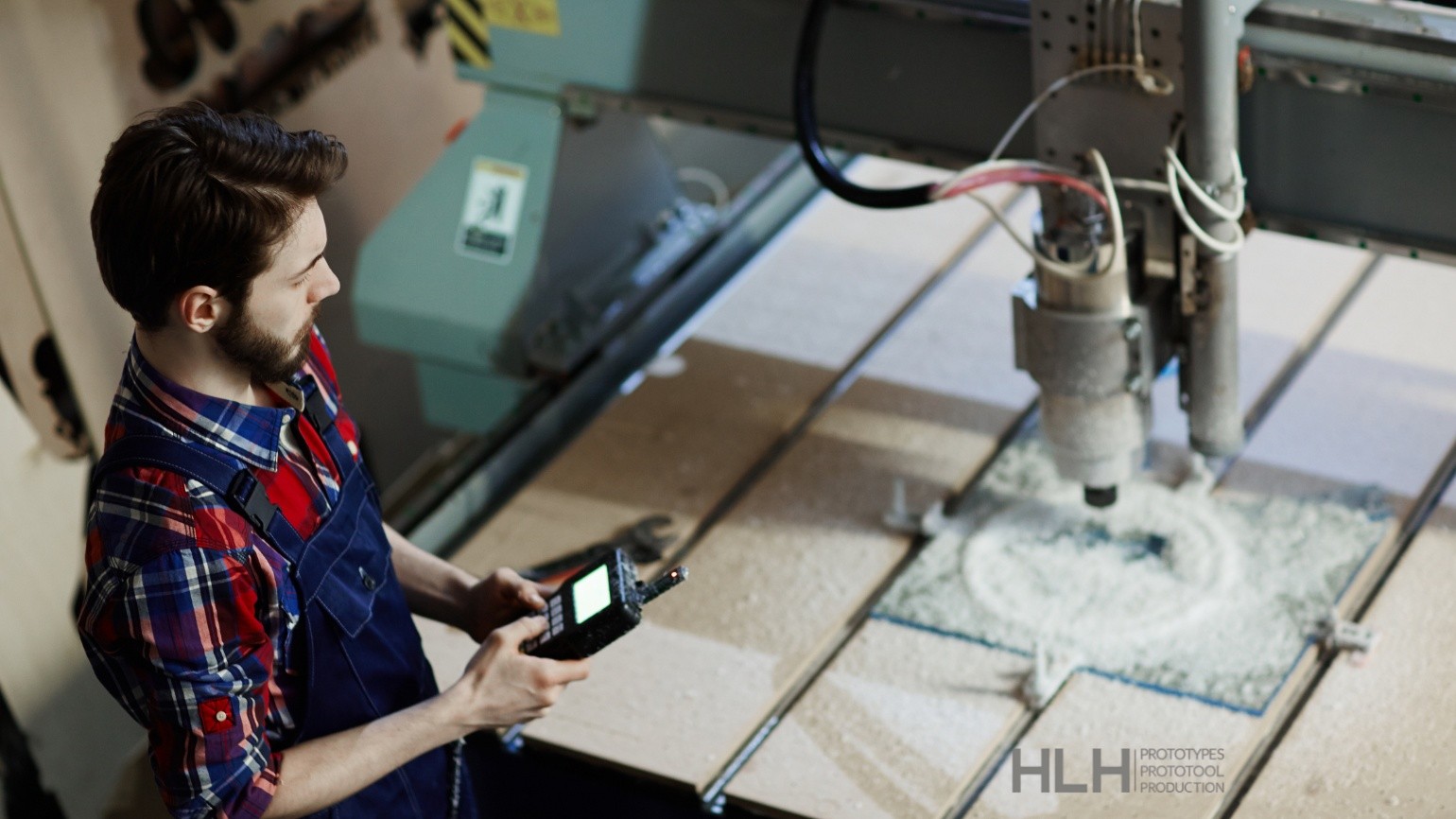
The decisions and the choices you make in prototyping can set the tone for your entire development cycle — from the development speed to the overall cost and how competitive your product can be in the market. For early-stage hardware teams, the decision often comes down to either 3D printing or prototype sheet metal fabrication. Each method brings clear advantages depending on your goals.
| Prototype Sheet Metal | 3D Printing | |
| Material strength | High tensile strength and fatigue resistance | Depends on material; generally lower than metal |
| Surface quality | Smooth, uniform finishes with no layer lines | May show visible layer lines; requires post-processing for smoothness |
| Scalability / Cost per unit | Cost per part drops with volume due to setup amortization | Fixed cost per part; less scalable at higher volumes |
| Setup time | Requires tooling/setup, but fast once ready | Minimal setup; straight from digital model |
| Speed to first part | Slower due to setup | Faster — parts can be ready in hours |
| Complex geometries | Limited by fabrication constraints (e.g., no internal voids) | Excellent for hollow, intricate, or consolidated parts |
| Joining & assembly | Easy to join with standard methods (e.g., welding, fasteners) | Printed as a single part; less need for assembly |
| Customization / Iteration | More effort to change designs once setup is complete | Easy to modify or personalize each part |
| Material options | Broad range of metals and alloys | Growing variety of polymers, composites, and metal powders |
| Best use case | Strong, scalable prototypes with real-world durability | Rapid iteration, complex shapes, or short runs |
What do sheet metal prototypes bring to the table?
Sheet metal prototyping gives you strong and durable parts with excellent tensile strength and fatigue resistance.
From a cost perspective, a prototype sheet metal becomes more cost-effective as you order more parts. Your manufacturer can spread out the setup costs across multiple parts to reduce the price per unit. By using processes like forming and stamping, they can deliver low-volume parts at a reasonable cost. Meanwhile, 3D printing can be costly at scale, depending on your manufacturer.
Surface quality is another reason sheet metal prototyping stands out especially when paired with the right finishing techniques. A skilled manufacturer can deliver parts with smooth, uniform surfaces and no visible layer lines, cutting down or even eliminating the need for extra post-processing.
In addition, you can easily integrate a prototype sheet metal into assemblies through standard joining methods like fasteners and welding.
After completing the tooling and setup, sheet metal processes should move quickly. Depending on your project, the manufacturer can laser cut and punch, or even bend the metal to speed up production and scale production when necessary.
Benefits of sheet metal prototyping
With sheet metal prototyping, you get parts with:
- Strong mechanical performance and reliable material behavior
- Compatibility with standard joining and assembly methods
- Lower unit costs for medium to high production volumes
- Clean surface finishes with tight dimensional control
- Access to a wide range of metals and specialty alloys
- Predictable results from established manufacturing processes
When does 3D printing make more sense?
3D printing shines when your design involves complex shapes that aren’t achievable with prototype sheet metal. With 3D printing, you can produce parts with internal channels and hollow structures, as well as intricate geometries — all as a single part without assembly.
You’ll also appreciate how fast 3D printing is, as your parts can move straight from digital models to physical prototypes within hours, without tooling or long setup times. This allows you to iterate faster and validate designs quickly.
For low-volume needs, 3D printing can be more affordable than making a prototype sheet metal. You can expect consistent prices per unit, no matter how many parts you need, since it avoids the tooling expenses.
It’s also easier to customize your part with 3D printing during early design testing. Each printed part can differ without increasing production cost, which allows you to make personalized designs or frequent revisions.
These days, 3D printing gives you more material options that continue to expand as technology advances. Reputable manufacturers have access to new polymers, as well as reliable composites and metal powders that may expand your part’s potential.
Choosing the right method for early design testing
Both sheet metal prototyping and 3D printing can help with your early-stage product development. However, the best choice ultimately depends on what you want to test, whether that’s form and function or strength.
- Prototype sheet metal excels when you want to prioritize strength with surface quality and scalability.
- Meanwhile, 3D printing allows you to make parts with complex geometries and encourages you to iterate on designs rapidly, with options for low-volume customization.
By matching the process to your design priorities, you can reduce rework and control costs, and move your product closer to production readiness.
What should you choose?
Still can’t decide between making prototype sheet metal or 3D-printed parts? Consult our team at HLH Prototypes for professional insights. We specialize in both manufacturing technologies, so you can trust us to recommend the most suitable approach after your free project review.
For pricing or technical guidance, call +86 755 8256 9129. You can also email our experts at FreeQuote@HLHPrototypes.com to discuss your project in detail.