
From Prototype to Production: A Practical Guide to Low-Volume Manufacturing
Low-volume manufacturing is making anywhere from a few hundred to tens of thousands of finished parts with processes such as rapid tooling, CNC machining, vacuum casting and sheet metal, instead of hardened production tooling. It lets a product reach customers months sooner, and with less capital at risk, while demand is proven
The jump from a working prototype to a sellable product is where many projects stall. This guide sets out the stages, the process choices at each quantity, and the checks that keep quality steady as volumes grow.
Key Facts
- Low-volume runs range from a few hundred parts to hundreds of thousands, depending on the process.
- HLH rapid injection molding tools produce up to 100,000 parts in production resins.
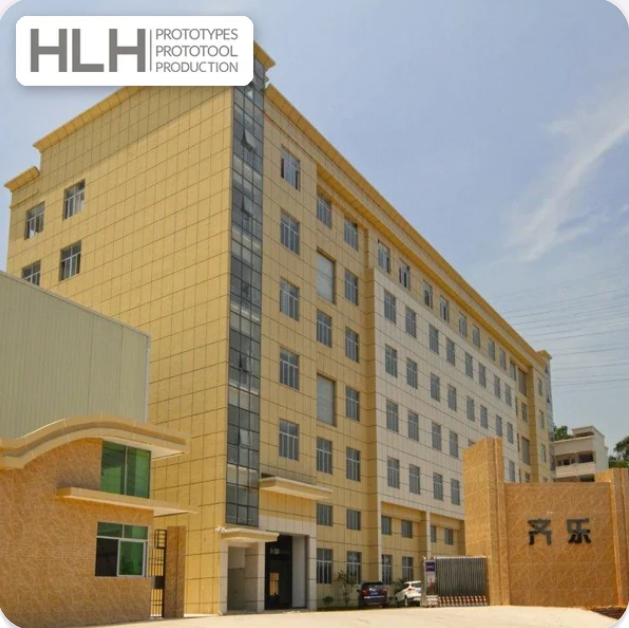
- HLH’s 12,000 m² facility in Shenzhen and Dongguan runs six dedicated manufacturing zones.
- A single silicone vacuum casting mold typically yields 15 to 25 parts.
- A DFM review before tooling is the cheapest point to change a design.
What Counts as Low-Volume Manufacturing?
There is no fixed number, but low-volume production usually means quantities too large for one-off prototypes and too small to justify multi-cavity hardened steel tools. For plastic parts that is often 100 to 50,000 units a year. For machined or sheet metal parts it can be any quantity, because those processes need little or no tooling.
Low-volume production suits product launches, medical and industrial equipment, robotics, aerospace and UAV parts, spares for older products, and any product whose demand is not yet known.
What Are the Stages From Prototype to Production?
Most hardware programs move through four steps, though the names vary by industry.
Concept prototypes. 3D printed models that test shape, size and ergonomics. Speed matters more than material.
Engineering prototypes. CNC machined or SLS parts in near-production materials, used to test fit, function and assembly.
Validation builds. Small batches made by vacuum casting or rapid tooling for reliability tests, certification and user trials.
Pilot and low-volume production. Parts made by the processes and inspection plan that will be used for sale, delivered in scheduled batches.
Which Process Fits Each Quantity?
1 to 10 parts: CNC machining or 3D printing. No tooling, fast turnaround.
10 to 50 parts: vacuum casting for plastic parts; CNC for metal.
50 to 100,000 parts: rapid injection molding for plastics; die casting or CNC for metals.
Any quantity: sheet metal fabrication, which needs little dedicated tooling.
These bands overlap. Part size, material, finish and tolerance can shift the best choice either way,
which is why the quantity is a starting point for a quote, not the answer.
How Do You Keep the Cost Per Part Under Control?
Low-volume costs come from two places: the tooling or setup, and the price of each part. Spread the tool cost over a realistic forecast, not the most optimistic one. A tool paid off over 2,000 parts costs very differently from one paid off over 20,000.
Order in batches that match your sales, but avoid tiny repeat batches on processes with high setup costs. And keep design changes for planned revisions; each change after tooling adds cost and time
Why Does a DFM Review Matter So Much?
A design for manufacturability (DFM) review checks wall thickness, draft angles, undercuts, tolerances and material choice before any tool is cut. It is the cheapest point in the whole program to change a design.
Good prototype manufacturing partners run this review as part of the quote. At HLH, engineers review every drawing, flag likely problems and suggest changes that reduce cost and risk before work starts.
How Do You Keep Quality Consistent as Volumes Grow?
Agree an inspection plan before production, not after the first problem. It should cover first article inspection, critical dimensions to check on every batch, cosmetic standards, material certificates and packaging.
HLH checks material identity and dimensional accuracy as standard parts of its process. On molded parts, T1 samples are measured against your drawing and approved before the run, and in-process and final checks follow through to packing and shipping.
Keep a golden sample. An approved part from the first batch, labeled and stored by both you and the
supplier, settles cosmetic questions on later batches in minutes. Pair it with a short list of critical dimensions that are measured and reported on every delivery, so a drift in the process shows up as a number long before it shows up as a field failure.
Why Use One Partner From Prototype to Production?
Changing suppliers between stages means re-explaining the design, re-qualifying the parts and often re-learning the same lessons. Many prototyping companies stop at prototypes; a partner that also runs rapid tooling, machining, casting, finishing and assembly keeps the knowledge from each stage with the people making your parts.
HLH’s facility is split into six zones: rapid tooling and injection molding, CNC milling of metals, sheet metal, plastics machining with finishing and assembly, 3D printing with vacuum casting and RIM, and engineering and project management. One project manager follows a part through all of them.
It also simplifies logistics. One supplier means one set of shipping documents, one point of contact for changes, and parts from different processes that arrive together, ready for assembly.
What Does a Low-Volume Program Cost?
Total program cost has four parts: tooling or setup, the price of each part, finishing and assembly, and the cost of changes. A rapid steel tool typically costs a fraction of a hardened multi-cavity production tool, and arrives in weeks rather than months. The piece price is higher, because cycle times are longer and the tool has fewer cavities.
For a run of a few thousand parts, that trade almost always favors rapid tooling. The saving is not only in tool cost; it is also in the months of earlier sales and the freedom to change the design between batches.
Machined, cast and sheet metal parts follow the same logic with smaller setup costs. Their price per part falls with quantity, then levels out, which is why quotes at two or three quantities are so useful
What Should a Low-Volume Supplier Provide?
Ask any low-volume supplier for five things before production starts: a written quotation that lists tooling, piece price and finishing separately; a DFM report; a first article or T1 sample inspection report; material certificates; and a clear lead time for repeat batches.
Ask, too, how changes are handled. Engineering changes are normal in low-volume programs, so you want to know how a revision is quoted, how quickly a tool can be modified, and how old stock is managed.
Finally, agree packaging and shipping. Parts that arrive scratched or mixed between revisions cost as much time as parts made wrong. Labeling by part number and revision, and protective packing for cosmetic parts, should be written into the order
How Do You Plan Batches Without Overstocking?
Low-volume production works best in scheduled batches tied to a sales forecast. Agree a batch size that keeps setup costs reasonable, then review the forecast before each batch rather than ordering a year of stock up front.
Keeping the tool at your supplier, ready to run, means a repeat batch is a phone call and a purchase order, not a new project.
When Should You Move to Production Tooling?
Move to hardened, multi-cavity tools when annual volumes are stable and high enough that the lower piece price pays for the extra tool cost within an acceptable time, and when the design has stopped changing.
Until then, rapid tooling and other low-volume processes let you sell, learn and improve. Experienced rapid prototyping companies can model the break-even point for you, comparing total program cost under each option. Our low-volume manufacturing white paper covers the trade-offs in more detail
Frequently Asked
How many parts is low volume?
It depends on the process, but it usually covers anything from a few hundred to tens of thousands of
parts a year.
Can low-volume parts be used for certification?
Yes. Rapid tooled parts are molded in production resins, so they can be used for UL, CE and similar
testing.
How long does it take to go from prototype to first production parts?
With rapid tooling, first production-quality parts typically arrive within a few weeks of design approval.
Does HLH handle finishing and assembly?
Yes. Finishing and assembly are handled in-house, in a dedicated zone of the HLH facility.